• About
    • The Salutations

letters to my class

  • October 16, 2012

    October 15th, 2012

    Dear Toolmakers,

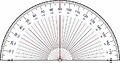
    They say a carpenter is only as good as his tools, but the same is true for Geometers. Today we will use half-circle and full-circle protractors to measure angles. When we use a tool, we have to know how to use it accurately and precisely. We also have to know how to use it responsibly, because the reverse of that saying is true as well: our tools are only as good as we are.

    Just as you always estimate before you calculate, you should also have an idea of what you want to do with your tool before you begin using it. In the case of angles, we should always classify them as acute, obtuse, right, straight, or reflex before we ever line our protractor up with the vertex of the angle.

    Speaking of tools–Marshall McLuhan once said, “First we shape our tools, then they shape us.” What do you think that means? How have tools shaped you and how you think about the world?

    Sincerely,

    Mr. Heimbuck
    20121015-200013.jpg

  • October 15, 2012

    October 14th, 2012

    Dear Courageous Seekers of the Good Life,

    Every time I see the photos below, I get really excited (and a little scared). When I was watching the live feed and he did his little bunny hop off of the capsule, I almost passed out. The data still has to be properly crunched (these things take time, you know!) but it seems certain that on Sunday Felix Baumgartner became the first human to break the sound barrier without a vehicle. He also has the record for highest altitude for a free fall and the highest manned balloon flight.

    Many great thinkers call courage the most important virtue. Felix Baumgartner definitely showed it yesterday. He showed courage by jumping out of a capsule that was 24 miles about the earth, but he also showed courage by pushing the limits of what human beings thought was possible. Courage is not just bravery in the face of physical fear; it also means doing the right thing when there’s no promise of reward and even if defeat seems likely. There will be many times in your life when doing the right thing is difficult, unpopular, inconvenient, or painful. I hope you have the courage to do it anyways

    Today, we will take our MAPS math test. Taking this test is a bit different than free falling to Earth at 830 miles per hour, but it still takes courage to do your best, have confidence in your abilities, and work hard everyday to be the best that you can be. You will do these things not because they will help you become rich or famous, but because they are the right thing to do.

    Sincerely,

    Mr. Heimbuck

    20121014-184300.jpg

  • October 12, 2011

    October 12th, 2012

    Dear Geometers,

    Over the gates leading to Plato’s academy, he posted these words: “Let none ignorant of geometry enter here.” Plato and the Greeks could do amazing things with just a compass and a straightedge, and what they taught us about geometry remains with us today.

    Geometry exists in a weird place between the ideal and the real. While we see geometric forms in the natural world, the world of geometry is in the world of ideas. In geometry when we talk about a circle, we’re really talking about the idea of a collection of points equidistant from one point. This makes geometry a playful and potential-filled discipline, which will not only let you better understand the natural world, but also dive deeper into the higher world of ideas.

    Sincerely,

    Mr. Heimbuck

  • October 11, 2012

    October 10th, 2012

    Dear Scientists,

    I was impressed by many of your paper airplane designs yesterday. Today, we’ll try out some more. When we do, we’ll base our changes on hypotheses that we think will happen when we make those changes. What do we need to do to make the plane fly farther or faster or to have a longer airtime? Those are the types of questions scientists ask. As scientist, we’re lucky to have the scientific method to help us. The scientific method is a tried and true method for finding pertinent questions, hypothesizing what we think the answer is, testing the answer, and finally drawing conclusions. We will work through this method today as we design and engineer our airplanes.

    Speaking of design, did you see the picture of the new electric motorcycle that a company is working on? It’s a motorcycle with a steel shell and special tires that keep it balance. It gets great  mileage, is safer and more comfortable than a typical motorcycle, and has special tires that keep it balanced. And just look at the thing: it’s stinking cool!

    Sincerely,

    Mr. Heimbuck

  • October 10, 2012

    October 9th, 2012

    Dear Data Trackers,

    Today we’re going to talk about how we know what we know about the American people. Every ten years, the government collects census information. That’s a way of not only figuring out how many people live in this country (the 2010 census tabulated 308, 745, 538 people) but also where they live, what they do, what languages they speak, and who they are. This information is vitally important and what’s more, it’s really interesting.

    Today we will do a classroom census and crunch the data that we come up with. We’ll need to collect the data, display the data, analyze the data, and interpret the data. What we most want to do is use the data to tell us something true and interesting about our class.

    Sincerely,

    Mr. Heimbuck

    P.S. We will continue to follow Felix Baumgartner’s attempt at the breaking the sound barrier in just a pressurized suit. Hopefully, he launches soon.

  • October 9, 2012

    October 8th, 2012

    Dear Tablemakers,

    A table is a powerful tool for solving problems. By putting our data into a table, we can find patterns. Sometimes, we’re lucky enough to find a rate. Speed is an example of a rate. To calculate speed, we need two measurements–distance and time. When we put these two measurements into a table, we see the relationship between the two.

    Today, we’ll practice calculating speed and collecting other types of data. Remember, anytime you see a thing or a phenomenon, your job as a scientist is to ask, “How can I measure this?” and “How can I collect data about this?”  If you approach the world with that mindset, the world will open itself up  and reveal its most interesting secrets.

    There are still a lot of the secrets the world has not revealed to us. We need smart, observant, persistent, and creative scientists to figure them out. I think some of you might be those scientists.

    Sincerely,

    Mr. Heimbuck

  • October 8, 2012

    October 7th, 2012

    Dear Samplers and Strivers for Excellence,

    How long would it take you to count to one billion?

    There’s not really an exact answer to that question. And even if there were, it wouldn’t really mean anything. Who cares how long it takes to count to a billion? That’s not going to help us put a human on Mars. Plus, there are so many variables: How quickly do you count? Can you break for meals? Can you stop counting at night to sleep? Etc, etc.

    What is useful, however (and what will help us put a human on Mars), is designing an efficient and sound method for making reasonable estimates. Today we’ll sharpen our estimation skills and teach ourselves to always think strategically. Doing so will help us immensely in our lives.

    We’ll also medtiate on this bit of advice from my good  buddy Aristotle: “We are what we repeatedly do. Excellence, then, is not an act but a habit.”

    Be excellent,

    Mr. Heimbuck

  • October 5, 2012

    October 4th, 2012

    Dear Measurers of Time and Space,

    One of the most ingenious things humans came up with is the many ways we have to measure things. We use body measures, strides, kings’ appendages, the ticking of atoms, and countless other distances and times to be units for measure. However, when humans got together and agreed on some similar units of measure, science was forever revolutionized. That revolution in science continues and will keep going on.

    Science is not only about observing the natural world but also about communicating those observations. To do that, we have to speak some kind of common language. For scientists, that language is one of measurements and data. To be a scientists, you have to know how to measure, know how to collect data, and know how to analyze, interpret, and communicate that data.

    Sincerely,

    Mr. Heimbuck

  • October 4, 2012

    October 3rd, 2012

    Dear Woodshedders,

    Woodsheddin’ is a term musicians use to describe the type of dedicated, independent, and intense practice that being great at a musical instrument requires. I know I’ve spent many hours woodsheddin’ on my guitar. In those hours of practice, my fingers grew stronger, my mind saw patterns on the fretboard, and my ears heard new sounds that I didn’t previously think possible.

    To be great at anything requires intense practice. Yesterday, we practiced our multiplication algorithm. We’ll continue that today. To become proficient at these algorithms, you have to spend lots of time doing problems over and over. I can show you the process. I can coach you through the process. I can even show you cool new processes that might better fit your mind (we’ll learn the Egyptian method today). But I can’t do the practice for you. You have to put in the work. And if you do, you will get the rewards.

    Sincerely,

    Mr. Heimbuck

  • October 3, 2012

    October 2nd, 2012

    Dear Debaters,

    Being engaged and aware of the political process is part of the good life. America is one big experiment in self-governance. That means that we are a government of the people, by the people, and for the people. That takes work, however, and as responsible citizens we must make ourselves aware of what’s going on in the world. We must also have the courage to make our voices heard and stand up for what we think is right.

    Tonight, the two presidential candidates will have their first of three debates. The debate will take place just a few miles south of where we are right, and it will be on almost every channel on TV. I urge you to watch at least some of it. The issues they’ll talk about are things that do and will affect you. They are issues that you will also deal with and maybe  (hopefully) someday solve (or at least making less bad).

    Sincerely,

    Mr. Heimbuck

←Previous Page
1 … 97 98 99 100 101 … 103
Next Page→

Blog at WordPress.com.

  • Subscribe Subscribed
    • letters to my class
    • Join 34 other subscribers
    • Already have a WordPress.com account? Log in now.
    • letters to my class
    • Subscribe Subscribed
    • Sign up
    • Log in
    • Report this content
    • View site in Reader
    • Manage subscriptions
    • Collapse this bar