Skip to content
    • About
    • The Salutations

letters to my class

  • October 29, 2012

    October 29th, 2012

    Dear Future Electors,

    Every four years, Americans pay extra close attention to US geography. That’s because of the method we use to elect the President of the United States. Depending on a state’s population, each state receives a certain number of electoral votes. All of those electoral votes go to the candidate who received a larger percentage of the popular vote in that state. As you watch the news, you’ll see Barack Obama and Mitt Romney are spending all of their time in places like Ohio, Florida, and Colorado. That’s because those states are still up for grabs, and whoever wins those electoral votes will most likely win the presidency.

    The election is only 8 days away. We’ll spend our time this week talking about what we’re seeing in the news, having our own election, and thinking about the process of electing a President every four years.

    Sincerely,

    Mr. Heimbuck
  • October 25, 2012

    October 25th, 2012

    Dear Kids,

    I had so much fun meeting your families last night. It’s always great to see you as sons, daughters, brothers, and sisters. I can tell that family is important to you. It’important to me as well. My brothers are my best friends, even though we fought a lot while we were growing up. Family stays with you your whole life but friends often come and go.

    I look forward to meeting the rest of your families tonight. What you do in school reflects on your family, so make sure you make them proud.

    Sincerely,

    Mr. Heimbuck


  • October 24, 2012

    October 23rd, 2012

    Dear Classifiers,

    “How do we know?” is one of the Big Questions humans ask. Classification is one method humans have come up with to describe the nature of things. We decide what things are by putting them in groups with other “like” things. We also know what things are by excluding them from “non-like” things. You’ve been doing this your whole life. I see Elsie Mae do it all the time with her toys and books. In fifth grade we do the exact same thing, only instead of classifying blocks and stuffed animals, we classify ideas.

    So far we’ve classified angles as acute, obtuse, right, straight, or reflex, and we’ve classified triangles as equilateral, isosceles, and scalene. Today, we’ll classify polygons based on their properties. A square is really just the idea of a square, and that idea of a square rests on certain properties. A square is a square and not a triangle because of those properties. You look at a square and know it’s a square, but as classifiers and explainers, today you will describe the properties that make it a square.

    Sincerely,

    Mr. Heimbuck

  • October 23, 2012

    October 22nd, 2012

    Dear Thinkers,

    Humans have been asking the same questions for thousands of years: Why are we here? What can we know? How should we act? Those questions have never been put to rest, and I don’t think they ever will. It’s the responsibility of each of us to come up with our own answers to those questions. Our answers will probably change throughout life because that’s part of living, but we must always keep on the life-long search for more satisfying answers.

    All the stuff we do in school–learning comprehension strategies, differentiating between a noun and a verb, constructing congruent triangles–is to better equip you to wrestle with the big questions. I want you to master those skills, not because I think it will get you a better job, but because I want you to know the rich life that belongs to those who explore the big questions: Why are we here? What can we know? How should we act?

    Sincerely,

    Mr. Heimbuck

  • October 22, 2012

    October 21st, 2012

    Dear Practicers,

    Our brains aren’t very good at thinking about more than one thing at a time. When Peyton Manning throws a pass, he doesn’t think about how he’s throwing the football. He’s thinking about coverages and routes and which receiver is open. If he had to consciously think about what his fingers, hands, and arms were doing, he would never complete a pass. For Peyton Manning, throwing a football is automatic. It’s not automatic because he’s a supernaturally gifted athlete; it’s automatic because he’s spent thousands of hours practicing it.

    In fifth grade, we learn to do multi-step processes like long division, adding and subtracting fractions with unlike denominators, and  multiplying and dividing decimals. Each step of these processes requires a different operation. The only way that we can free our minds up to think about the processes  is if those individual operations are automatic. The only way those operations become automatic is through lots and lots of practice.

    Luckily, practicing doesn’t have to be boring. The best way to practice is with games. If you’re having fun and doing math that serves a purpose (even if the only purpose is fun) you’re more likely to remember what you’re practicing. But we also have to be smart about how we practice. And we have to know that we’re practicing  to reach excellence.

    Sincerely,

    Mr. Heimbuck

  • October 17, 2012

    October 17th, 2012

    Dear Book Readers,

    Since there’s no school Thursday or Friday, you have an extra-long weekend coming up. I know there’s nothing I love more than spending my breaks reading a great book. But don’t limit yourself to just one. I like to surround myself with books, jumping between four or five books at a time. There’s just so much to learn about the world and so little time.  I also like to read widely. While I have my favorite types of books, I don’t limit myself to only those. Part of being a book reader is being open-minded to new experiences and ways of being in the world.

    I’ve told you before that book reading is an essential part of the good life. That’s because the good life requires time for contemplation. solitude, and reflection. Book reading allows that.

    So find a book (or books) that you’re passionate about, that you get lost in, that transport you to another world, and you will kindle a new and more meaningful understanding of the vast world outside yourself and the deep world within.

    Sincerely,

    Mr. Heimbuck


  • October 16, 2012

    October 15th, 2012

    Dear Toolmakers,

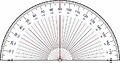
    They say a carpenter is only as good as his tools, but the same is true for Geometers. Today we will use half-circle and full-circle protractors to measure angles. When we use a tool, we have to know how to use it accurately and precisely. We also have to know how to use it responsibly, because the reverse of that saying is true as well: our tools are only as good as we are.

    Just as you always estimate before you calculate, you should also have an idea of what you want to do with your tool before you begin using it. In the case of angles, we should always classify them as acute, obtuse, right, straight, or reflex before we ever line our protractor up with the vertex of the angle.

    Speaking of tools–Marshall McLuhan once said, “First we shape our tools, then they shape us.” What do you think that means? How have tools shaped you and how you think about the world?

    Sincerely,

    Mr. Heimbuck

    20121015-200013.jpg

  • October 15, 2012

    October 14th, 2012

    Dear Courageous Seekers of the Good Life,

    Every time I see the photos below, I get really excited (and a little scared). When I was watching the live feed and he did his little bunny hop off of the capsule, I almost passed out. The data still has to be properly crunched (these things take time, you know!) but it seems certain that on Sunday Felix Baumgartner became the first human to break the sound barrier without a vehicle. He also has the record for highest altitude for a free fall and the highest manned balloon flight.

    Many great thinkers call courage the most important virtue. Felix Baumgartner definitely showed it yesterday. He showed courage by jumping out of a capsule that was 24 miles about the earth, but he also showed courage by pushing the limits of what human beings thought was possible. Courage is not just bravery in the face of physical fear; it also means doing the right thing when there’s no promise of reward and even if defeat seems likely. There will be many times in your life when doing the right thing is difficult, unpopular, inconvenient, or painful. I hope you have the courage to do it anyways

    Today, we will take our MAPS math test. Taking this test is a bit different than free falling to Earth at 830 miles per hour, but it still takes courage to do your best, have confidence in your abilities, and work hard everyday to be the best that you can be. You will do these things not because they will help you become rich or famous, but because they are the right thing to do.

    Sincerely,

    Mr. Heimbuck

    20121014-184300.jpg

  • October 12, 2011

    October 12th, 2012

    Dear Geometers,

    Over the gates leading to Plato’s academy, he posted these words: “Let none ignorant of geometry enter here.” Plato and the Greeks could do amazing things with just a compass and a straightedge, and what they taught us about geometry remains with us today.

    Geometry exists in a weird place between the ideal and the real. While we see geometric forms in the natural world, the world of geometry is in the world of ideas. In geometry when we talk about a circle, we’re really talking about the idea of a collection of points equidistant from one point. This makes geometry a playful and potential-filled discipline, which will not only let you better understand the natural world, but also dive deeper into the higher world of ideas.

    Sincerely,

    Mr. Heimbuck

  • October 11, 2012

    October 10th, 2012

    Dear Scientists,

    I was impressed by many of your paper airplane designs yesterday. Today, we’ll try out some more. When we do, we’ll base our changes on hypotheses that we think will happen when we make those changes. What do we need to do to make the plane fly farther or faster or to have a longer airtime? Those are the types of questions scientists ask. As scientist, we’re lucky to have the scientific method to help us. The scientific method is a tried and true method for finding pertinent questions, hypothesizing what we think the answer is, testing the answer, and finally drawing conclusions. We will work through this method today as we design and engineer our airplanes.

    Speaking of design, did you see the picture of the new electric motorcycle that a company is working on? It’s a motorcycle with a steel shell and special tires that keep it balance. It gets great  mileage, is safer and more comfortable than a typical motorcycle, and has special tires that keep it balanced. And just look at the thing: it’s stinking cool!

    Sincerely,

    Mr. Heimbuck

←Previous Page
1 … 98 99 100 101 102 … 105
Next Page→

Blog at WordPress.com.

  • Subscribe Subscribed
    • letters to my class
    • Join 34 other subscribers
    • Already have a WordPress.com account? Log in now.
    • letters to my class
    • Subscribe Subscribed
    • Sign up
    • Log in
    • Report this content
    • View site in Reader
    • Manage subscriptions
    • Collapse this bar