• About
    • The Salutations

letters to my class

  • 6 October 2015

    October 6th, 2015

    azteccalendar10.6.15Dear Artists,

    This week we’ll take a whirlwind tour of the ancient civilizations of the Americas–Mayan, Aztec, Anasazi, and Moundbuilders. We’ll see that agriculture played the central role in these civilizations  because it allowed many people to stop farming and begin new areas of human development–architecture, writing, science, math, and art.

    I think there’s something centrally human about making art. Instead of merely making the things we need to survive, we like to make them in a way that is beautiful, a way that speaks to some sort of ideal world we all wish we coud live in. Look at the calendar the Aztec made hundreds of years ago. It’s not just squares in a grid, it’s something much more beautiful.

    Humans don’t just make buildings, we create architecture. We don’t make sounds, we make music. We don’t just move our bodies, we dance.

    Sincerely,

    Mr. H

  • 5 October 2015

    October 5th, 2015

    Dear Cultural Historians,

    Today we’ll continue to think about how the United States is broken up into physical regions. Through reading closely and widely about these regions, we’ll begin to learn about how people in different places in the United States live. These are called human or cultural regions.

    Why do geographers create regions? To better understand a place, and there is a lot to understand. What people do, how people act, what people believe, what people eat, how people behave–these are all influenced by where people live and in turn, impact the places themselves.

    To show how much you know about the culture and geography of the United States, you’ll create your own regions, based on cultural and physical characteristics. As geographers, you’ll do this to understand how the United States works.

    Sincerely,

    Mr. H

  • 2 October 2015

    October 2nd, 2015

    watsons 10.2.15Dear Empathizers,

    Books and learning let us see the world from other times and places. Only ever living in our own place and own time is an impoverished life. Humans are meant to try to understand the world from many other points of view. Books let us do that.

    Through books we can imagine what life was like for an African-American family in Flint, MI in 1963; we can imagine what life was like for newly arrived immigrants passing by the Statue of Liberty; we can even imagine what life was like for those First Americans as they tried to chase bison over cliffs using only rocks and their own two legs.

    Living the good life is an act of imagination.

    Sincerely,

    Mr. H

  • 1 October 2015

    October 1st, 2015

    fibonacci 10.1.15Dear Mathematicians,

    We’ve learned a lot of new strategies for multiplying and dividing numbers. The important thing to remember is that these strategies aren’t only so you can quickly and accurately arrive at the correct answer. When learning these strategies, they might seem confusing and awkward. But over time you’ll begin to understand the concepts behind them, and you’ll find yourself using them to solve problems mentally.

    We want you to learn to think about numbers in deep ways. We want you to understand how numbers and operations work, so you can use numbers to solve more complex problems in the future.

    Math isn’t really about numbers. It’s about thinking in patterns. Numbers just happen to be a useful tool we use to talk about and model these patterns.

    Sincerely,

    Mr. H

  • 30 September 2015

    September 30th, 2015

    crenshaw 9.30Dear Readers,

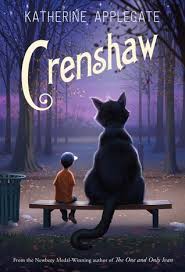
    I just picked up Katherine Applegate’s latest book, Crenshaw. She’s the author of The One and Only Ivan, which is one of our class’s all-time favorites. From what I’ve read so far, Crenshaw is great in similar ways. It tells a real story but uses fantastical elements (like talking animals) to give the story a deeper meaning. And, like most great books, the book is about the power of stories.

    I’ll have the book in the bin at the front of the room if you’d like to read it. I’m planning to read it aloud as soon as we finish reading about those Weird Watsons, but reading great books more than once is a great use of time.

    Sincerely,

    Mr. H

  • 29 September 2015

    September 29th, 2015

    ag9.29Dear Historians,

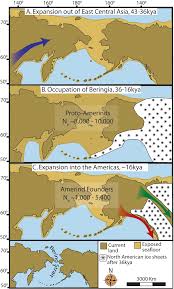
    Yesterday we talked about the First Americans traveling across the land bridge between Asia and the Americas and spreading out across the Americas. Today we’ll talk about one of the greatest discoveries in human history: agriculture.

    Think about the advantanges that agriculture allows. Now people could stay in one place rather than always chasing after game. With agriculture, fewer people would have to find food and others could learn new trades. Eventually, humans learned new methods for improving agricultural production beyond what hunters and gatherers ever thought possible.

    Sometimes when I’m in the grocery store, I like to imagine that I’m a prehistoric, pre-agricultural human seeing this incredible bounty of fruits and vegetables–all made possible by agriculture.

  • 28 September 2015

    September 28th, 2015

    9.28.15 speed limitDear Students,

    An unfortunate thing in school and society is that we give a lot of attention to bad behavior. It’s a lot more fun to talk about the few people who are doing bad things than the vast majority of people who are not. We also tend to remember the bad behavior and forget about about all the people who are doing what they’re supposed to do.

    When I’m driving, I completely forget about all of the people who are driving the speed limit like me. But we all remember the driver who zoomed past us going 20 or 20 mph too fast.

    All of the attention on these bad behaviors can lead us to believe that the behaviors are a lot more widespread than they really are. We might think, “Everyone’s doing it, so what’s the big deal if I do?” But that’s just not true. The norm is to follow the rules.

    Sincerely,

    Mr. H

  • 25 September 2015

    September 25th, 2015

    migration 9.25Dear Archeologists,

    How do we know what happened in the past? What evidence and ideas about the nature of the world do we use to know what people did before we were alive? These are two of my favorite questions and thinking about them will keep you busy for a lifetime.

    Over ten thousand years ago, the first people stepped foot onto North America. Historians, anthropologists, archeologists, geologists, and biologists have been debating how and when this happened. They have theories, but they’re always open to new evidence, and they have to think deeply about what makes evidence persuasive.

    These kinds of debates are fascinating, and I think they’re one of the best things about being a human being. When and where the first humans came to North American may not have much bearing on our everyday lives, but the process of weighing evidence, building arguments, and figuring out what’s true in the world is the most important job we humans have.

    Sincerely,

    Mr. H

  • 24 September 2015

    September 24th, 2015

    Dear Dreamyogi 9.24.15ers,

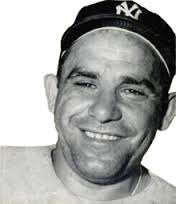
    On Monday, Yogi Berra died. He grew up with four brothers and sisters and Italian immigrant parents in St. Louis. His father was a construction worker. Yogi left school after eighth grade to help the family, but he kept playing baseball and eventually signed a contract to join the minor leagues.

    Nobody probably expected Yogi to become much of a baseball player–he was short, he was small, he was round, and he was sort of funny-looking. But he was also smart, hardworking, and he never took himself too seriously. He combined these traits into becoming the greatest catcher who ever played the game.

    No matter what you want to be successful at, the ingredients for success are the same: hardwork, passion, and humility. Yogi Berra used these traits to become one of the greatest (and most memorable) players who ever lived. What will you become?

    Sincerely,

    Mr. H

  • 23 September 2015

    September 23rd, 2015
    I just started reading this book yesterday. It's about memoir, not personal narratives, but it's a great primer on writing on one's own experience. Funny too.
    I just started reading this book yesterday. It’s about memoir, not personal narratives, but it’s a great reflection on writing about one’s own experience. Funny too.

    Dear Writers,

    We’re in the middle of drafting personal narratives, and I am impressed by what you’ve come up with so far. This is your opportunity to tell a story that only you can tell, and you want to tell it in the most beautiful and entertaining way possible.

    We’ve read a ton of personal narratives, so we know what good ones look and sound like it. And when we’re reading a really good personal narrative (or any type of good writing) we feel like the author is speaking directly to us. That’s your job as a writer–make each of your readers feel as though you’re speaking directly to them. No matter how different your life experience may be, if you tell your story in an engagng way, your reader will feel like you’re speaking directly to them.

    Sincerely,

    Mr. H

←Previous Page
1 … 86 87 88 89 90 … 103
Next Page→

Blog at WordPress.com.


Loading Comments...
 

    • Subscribe Subscribed
      • letters to my class
      • Join 34 other subscribers
      • Already have a WordPress.com account? Log in now.
      • letters to my class
      • Subscribe Subscribed
      • Sign up
      • Log in
      • Report this content
      • View site in Reader
      • Manage subscriptions
      • Collapse this bar