Skip to content
    • About
    • The Salutations

letters to my class

  • 30 September 2015

    September 30th, 2015

    crenshaw 9.30Dear Readers,

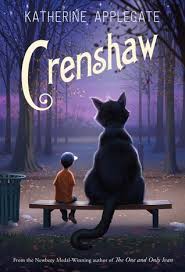
    I just picked up Katherine Applegate’s latest book, Crenshaw. She’s the author of The One and Only Ivan, which is one of our class’s all-time favorites. From what I’ve read so far, Crenshaw is great in similar ways. It tells a real story but uses fantastical elements (like talking animals) to give the story a deeper meaning. And, like most great books, the book is about the power of stories.

    I’ll have the book in the bin at the front of the room if you’d like to read it. I’m planning to read it aloud as soon as we finish reading about those Weird Watsons, but reading great books more than once is a great use of time.

    Sincerely,

    Mr. H

  • 29 September 2015

    September 29th, 2015

    ag9.29Dear Historians,

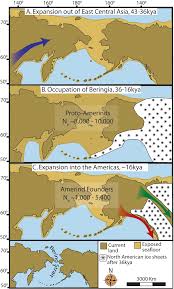
    Yesterday we talked about the First Americans traveling across the land bridge between Asia and the Americas and spreading out across the Americas. Today we’ll talk about one of the greatest discoveries in human history: agriculture.

    Think about the advantanges that agriculture allows. Now people could stay in one place rather than always chasing after game. With agriculture, fewer people would have to find food and others could learn new trades. Eventually, humans learned new methods for improving agricultural production beyond what hunters and gatherers ever thought possible.

    Sometimes when I’m in the grocery store, I like to imagine that I’m a prehistoric, pre-agricultural human seeing this incredible bounty of fruits and vegetables–all made possible by agriculture.

  • 28 September 2015

    September 28th, 2015

    9.28.15 speed limitDear Students,

    An unfortunate thing in school and society is that we give a lot of attention to bad behavior. It’s a lot more fun to talk about the few people who are doing bad things than the vast majority of people who are not. We also tend to remember the bad behavior and forget about about all the people who are doing what they’re supposed to do.

    When I’m driving, I completely forget about all of the people who are driving the speed limit like me. But we all remember the driver who zoomed past us going 20 or 20 mph too fast.

    All of the attention on these bad behaviors can lead us to believe that the behaviors are a lot more widespread than they really are. We might think, “Everyone’s doing it, so what’s the big deal if I do?” But that’s just not true. The norm is to follow the rules.

    Sincerely,

    Mr. H

  • 25 September 2015

    September 25th, 2015

    migration 9.25Dear Archeologists,

    How do we know what happened in the past? What evidence and ideas about the nature of the world do we use to know what people did before we were alive? These are two of my favorite questions and thinking about them will keep you busy for a lifetime.

    Over ten thousand years ago, the first people stepped foot onto North America. Historians, anthropologists, archeologists, geologists, and biologists have been debating how and when this happened. They have theories, but they’re always open to new evidence, and they have to think deeply about what makes evidence persuasive.

    These kinds of debates are fascinating, and I think they’re one of the best things about being a human being. When and where the first humans came to North American may not have much bearing on our everyday lives, but the process of weighing evidence, building arguments, and figuring out what’s true in the world is the most important job we humans have.

    Sincerely,

    Mr. H

  • 24 September 2015

    September 24th, 2015

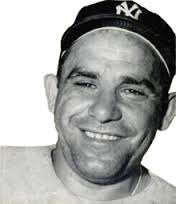
    Dear Dreamyogi 9.24.15ers,

    On Monday, Yogi Berra died. He grew up with four brothers and sisters and Italian immigrant parents in St. Louis. His father was a construction worker. Yogi left school after eighth grade to help the family, but he kept playing baseball and eventually signed a contract to join the minor leagues.

    Nobody probably expected Yogi to become much of a baseball player–he was short, he was small, he was round, and he was sort of funny-looking. But he was also smart, hardworking, and he never took himself too seriously. He combined these traits into becoming the greatest catcher who ever played the game.

    No matter what you want to be successful at, the ingredients for success are the same: hardwork, passion, and humility. Yogi Berra used these traits to become one of the greatest (and most memorable) players who ever lived. What will you become?

    Sincerely,

    Mr. H

  • 23 September 2015

    September 23rd, 2015
    I just started reading this book yesterday. It's about memoir, not personal narratives, but it's a great primer on writing on one's own experience. Funny too.
    I just started reading this book yesterday. It’s about memoir, not personal narratives, but it’s a great reflection on writing about one’s own experience. Funny too.

    Dear Writers,

    We’re in the middle of drafting personal narratives, and I am impressed by what you’ve come up with so far. This is your opportunity to tell a story that only you can tell, and you want to tell it in the most beautiful and entertaining way possible.

    We’ve read a ton of personal narratives, so we know what good ones look and sound like it. And when we’re reading a really good personal narrative (or any type of good writing) we feel like the author is speaking directly to us. That’s your job as a writer–make each of your readers feel as though you’re speaking directly to them. No matter how different your life experience may be, if you tell your story in an engagng way, your reader will feel like you’re speaking directly to them.

    Sincerely,

    Mr. H

  • 22 September 2015

    September 22nd, 2015

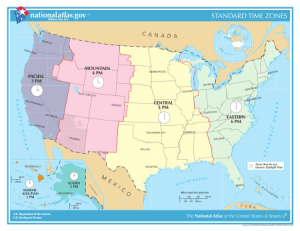
    Dear Geographers,

    time zones 9.22.15To better understand a large landmass like the Americas, it’s useful to break it up into parts. We call these parts regions, and geographers have found many, many ways to make regions in the United States. These regions can be based on landforms, location, what people do, climate, culture, language, and beliefs.

    Where we are in Colorado is part of many, many regions. We could call ourselves Front Range of Colorado, the Intermountain West, the Rocky Mountains, the Middle, or the Great Plains. Other parts of Colorado are located in Tornado Alley, the Jello-O Belt, and the Four Corners region.

    No matter where you are, you are in a place that has many characteristics and a rich history. Being a part of a community means trying to understand the place you are.

    Sincerely,

    Mr. H

  • 28 May 2015

    May 28th, 2015

    Dear Number Mavens,

    Yesterday we compared the Mayan number system to our own. We’re so used to everything being based around 10, when we see a different system that’s based around 20, it takes us awhile to wrap our minds around it. But it seems that most of you understood the difference and could figure out what the symbols stood for. Some of you even figured out how to represent large numbers using only Mayan symbols. That’s tough work!

    Humans use numbers to represent things in their world. The Mayans used numbers to understand time, seasons, space, and architecture. They needed numbers so they could create masterful works: pyramids, calendars, and trade routes. Today, we do the same thing with our number system. While the number systems might look different, they both show a deeply human desire to understand the world and change it for the better.

    Sincerely,

    Mr. H

  • 20 May 2015

    May 20th, 2015

    Dear Geometers,

    Yesterday we talked about geometric solids. We discussed the properties of these different solids to compare and contrast them. Today, we’ll talk about a specific class of geometric solids. As we’re studying them, be thinking about the trait that they all share. Just as amphibians, reptiles, mammals, birds, and fish belong to their classes based on specifc traits, humans also classify geometric solids by specific traits.

    The difference between organisms and geometric figures is that one exists in the real world and one mostly exists in the world of ideas. We can find real world approximations for cylinders, spheres, and other geometric solids, but they are mostly ideas that exist based on traits that humans agree on. For that reason, they have a certain, magical, power.

    Sincerely,

    Mr. H

  • 19 May 2015

    May 19th, 2015

    Dear Geometers,

    Today we’ll begin discussing geometric solids. We’ll classify these solids based on their attributes, and we’ll think about how these solids are similiar and different. It’s important to keep in mind the vital differences between two-dimensional and three-dimensional figures. They really do live on different worlds, although they like to visit each other.

    Luckily, our friend Euler found out some secrets about polyhedrons (a specific type of solid). I think you’ll be amazed by the rules these polyhedrons follow.

    Sincerely,

    Mr. H

←Previous Page
1 … 88 89 90 91 92 … 105
Next Page→

Blog at WordPress.com.

Loading Comments...
  • Subscribe Subscribed
    • letters to my class
    • Join 34 other subscribers
    • Already have a WordPress.com account? Log in now.
    • letters to my class
    • Subscribe Subscribed
    • Sign up
    • Log in
    • Report this content
    • View site in Reader
    • Manage subscriptions
    • Collapse this bar