• About
    • The Salutations

letters to my class

  • 22 September 2015

    September 22nd, 2015

    Dear Geographers,

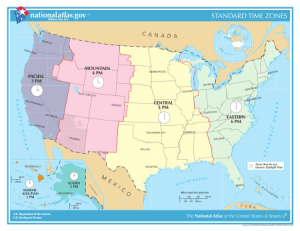
    time zones 9.22.15To better understand a large landmass like the Americas, it’s useful to break it up into parts. We call these parts regions, and geographers have found many, many ways to make regions in the United States. These regions can be based on landforms, location, what people do, climate, culture, language, and beliefs.

    Where we are in Colorado is part of many, many regions. We could call ourselves Front Range of Colorado, the Intermountain West, the Rocky Mountains, the Middle, or the Great Plains. Other parts of Colorado are located in Tornado Alley, the Jello-O Belt, and the Four Corners region.

    No matter where you are, you are in a place that has many characteristics and a rich history. Being a part of a community means trying to understand the place you are.

    Sincerely,

    Mr. H

  • 28 May 2015

    May 28th, 2015

    Dear Number Mavens,

    Yesterday we compared the Mayan number system to our own. We’re so used to everything being based around 10, when we see a different system that’s based around 20, it takes us awhile to wrap our minds around it. But it seems that most of you understood the difference and could figure out what the symbols stood for. Some of you even figured out how to represent large numbers using only Mayan symbols. That’s tough work!

    Humans use numbers to represent things in their world. The Mayans used numbers to understand time, seasons, space, and architecture. They needed numbers so they could create masterful works: pyramids, calendars, and trade routes. Today, we do the same thing with our number system. While the number systems might look different, they both show a deeply human desire to understand the world and change it for the better.

    Sincerely,

    Mr. H

  • 20 May 2015

    May 20th, 2015

    Dear Geometers,

    Yesterday we talked about geometric solids. We discussed the properties of these different solids to compare and contrast them. Today, we’ll talk about a specific class of geometric solids. As we’re studying them, be thinking about the trait that they all share. Just as amphibians, reptiles, mammals, birds, and fish belong to their classes based on specifc traits, humans also classify geometric solids by specific traits.

    The difference between organisms and geometric figures is that one exists in the real world and one mostly exists in the world of ideas. We can find real world approximations for cylinders, spheres, and other geometric solids, but they are mostly ideas that exist based on traits that humans agree on. For that reason, they have a certain, magical, power.

    Sincerely,

    Mr. H

  • 19 May 2015

    May 19th, 2015

    Dear Geometers,

    Today we’ll begin discussing geometric solids. We’ll classify these solids based on their attributes, and we’ll think about how these solids are similiar and different. It’s important to keep in mind the vital differences between two-dimensional and three-dimensional figures. They really do live on different worlds, although they like to visit each other.

    Luckily, our friend Euler found out some secrets about polyhedrons (a specific type of solid). I think you’ll be amazed by the rules these polyhedrons follow.

    Sincerely,

    Mr. H

  • 18 May 2015

    May 18th, 2015

    Dear Classifiers,

    There are many, many species of animals (and many more that we don’t even know about). Before we study these animals, it’s helpful to put them into categories. Biologists have a special method of classifying animals based on important traits. What kind of traits are important for putting animals into groups?

    We can use the same ideas about classification to better understand numbers, polygons, and polyhedrons (3-D shapes). This week, we’ll classify all of these things, and see the deep understanding that happens when we put like things next to each other.

    Sincerely,

    Mr. H

  • 15 May 2015

    May 15th, 2015

    Dear Readers and Writers,

    Losing yourself in a text and seeing the world from a different point of view is one of life’s greatest pleasures. Reading Willaim Blake’s “The Echoing Green” transports us to a different place and makes us think about the rhythms and truths of life and nature. To think that Blake accomplished that using only words is amazing.

    Being able to read well and write clearly are super powers. As author and illustrator Kevin O’Malley said when he visited Meadow a few years ago, “I write because I want to control people’s minds.” That, however, is a tough job, and it requires a lot of hard work–reading, writing, rereading, rewriting–throughout our lives.

    Sincerely,

    Mr. H

  • 14 May 2015

    May 14th, 2015

    Dear Dragonslayers,

    Today we’ll read dragon myths. We know how humans long ago came to imagine dragons, and today we’ll read some of the heroic stories they created about these scaled creatures. Often in these myths, heroes fight dragons not only to show their strength or valor, but to save their communities who live under constant threat from the beast. What character traits would it require to slay a dragon? Do you have what it takes to fight dragons?

    Sincerely,

    Mr. H

  • 13 May 2015

    May 13th, 2015

    Dear Language Lovers,

    This week is palindrome week because all the dates between May 10th and May 19th are palindromes: 51015, 51115, 51215, etc. As you well know, palindromes are words, phrases, or numbers that read the same forwards and backwards.

    Intrepid writers have discovered palindromes of suprising and dazzling length and complexity: “A man, a plan, a canal: Panama.” “Go hang a salami. I’m a lasagna hog.” It almost convinces me that palindromes reveal secret meanings about the world (or maybe they’re just hilarious).

    Palindromes remind us how clever humans are when working with words. Merely getting our meaning across is not enough. We want to do it with style, grace, and beauty.

    Sincerely,

    Mr. H

  • 12 May 2015

    May 12th, 2015

    Dear Pattern Makers,

    Today we’ll look at and create frieze patterns: repeating, geometric designs that we often see below roofs or ceilings. Frieze patterns are examples of geometry in action. They repeat the same pattern with symmetrical differences: reflections, rotations, and translations.

    Since we use math to make models of the real world, it’s no surprise that we see it wherever we look. Math is an invaluable tool in understanding the natural patterns that humans are drawn to and the beautiful art that humans like to draw.

    Sincerely,

    Mr. H

  • 11 May 2015

    May 11th, 2015

    Dear Storytellers,

    Recently, we’ve been reading Tall Tales–John Henry, Johnny Appleseed, and Paul Bunyan. We know that these stories may have originally been about real people, but, over time, other real people did what real people tend to do: stretched the truth.

    This week we’ll explore other ways that humans take facts and twist them into fantastical stories. When humans first started digging fossils, what creatures did they imagine? When humans felt like they didn’t have control over their lives, what stories tales did they weave to make sense of their world?

    As readers, writers, and thinkers, we have to always be on the lookout for the difference between truth and fiction. Sometimes, that’s much more difficult than it seems.

    Sincerely,

    Mr. H

←Previous Page
1 … 87 88 89 90 91 … 103
Next Page→

Blog at WordPress.com.


Loading Comments...
 

    • Subscribe Subscribed
      • letters to my class
      • Join 34 other subscribers
      • Already have a WordPress.com account? Log in now.
      • letters to my class
      • Subscribe Subscribed
      • Sign up
      • Log in
      • Report this content
      • View site in Reader
      • Manage subscriptions
      • Collapse this bar