• About
    • The Salutations

letters to my class

  • 18 January 2018

    January 18th, 2018

    millay1.18Dear Readers,

    Edna St. Vincent Millay wrote “Afternoon on a Hill” in 1917. That was before any of my grandparents were born. At that time it took 3 days to travel from New York City to Los Angeles.

    Yesterday–when you can travel from New York to Los Angeles in just a few hours–some of you read “Afternoon on a Hill.” And even though so much has changed in the world. Even though your lives are so different from the life of Edna St. Vincent Millay, that poem still spoke to you.

    That’s the power of literature. It finds that human core that is true in all times and places.

    Sincerely,

    Mr. Heimbuck
     

  • 17 January 2018

    January 17th, 2018

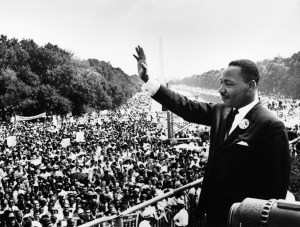
    mlk1.17Dear Speakers,

    Words have power. Words move people to do things. Words not only predict the future, they actually shape that future.

    Yesterday some of you thought Martin Luther King, Jr. was a president. Because you knew he was a man of great power, you assumed he must have held a powerful position.

    But he wasn’t a president or a king or any kind of elected official. His power came from the words he used. The words that inspired people to peacefully fight for what was right, no matter what the cost.

    What sort of powerful words do you have?

    Sincerely,

    Mr. Heimbuck

  • 16 January 2018

    January 16th, 2018

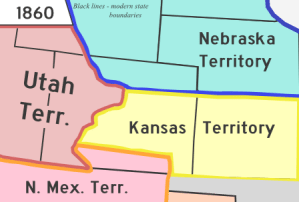
    Colorado in 1860Dear Historians,

    This is Colorado in 1860–divided between four territories. In the centuries before that, it was divided between as many countries–Spain had its claims, France had its claims, Native people had their claims. Throughout its history, Colorado has been a borderland. An in-between place.

    That gives it a rich and complicated history. But the big question we have to ask is this: what drew people here? What is it about this place that convinced people to risk their lives and fortunes to come here? That answer is just as complicated, but it’s the question that drives our understanding of Colorado history.

    Sincerely,

    Mr. Heimbuck

  • 11 January 2018

    January 11th, 2018

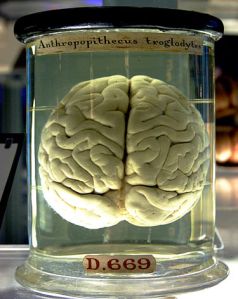
    brain1.11Dear Learners,

    Yesterday, while you were exploring the history of the universe, I was learning about how the human brain learns. And here’s the big thing I learned:

    Intelligence is not fixed. Everyone can learn and get smarter and “grow” their brain connections.

    But it takes a lot of effort, practice, and time. My job is to choose activities that get your brain “working.” And your job is to put in the effort needed to build those new connections.

    Let’s do that today and everyday.

    Sincerely,

    Mr. Heimbuck

  • 10 January 2018

    January 10th, 2018

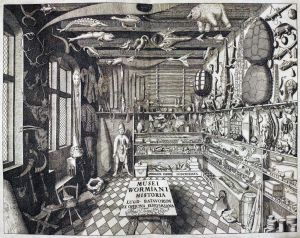
    museum1.10Dear Learners,

    Natural history museums are where I’ve learned the most about the world. And it’s easy to see why: museums are where we fit all of the knowledge of the world into one building.

    In one day in one place in the middle of Denver, Colorado, you can see the beginning of the universe 14 billion years ago. Then take a short walk to the planetarium and watch it rain diamonds on Jupiter. Next, observe the beginnings of human civilization over in Ancient Egypt.

    It’s all there. And it’s not just for the rich or powerful. This knowledge belongs to everyone. Take advantage of it.

    Sincerely,

    Mr. H

  • 9 January 2018

    January 9th, 2018

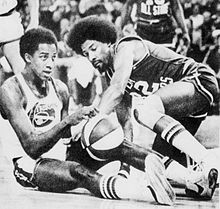
    nba1.9Dear Learners,

    Over the break, I got really into NBA basketball. I’ve begun watching Nuggets games, reading tons of articles, and poring over box scores.

    And it’s reminded me what a pleasure it is to learn new things.

    Learning a new thing is like plopping yourself down into an alien world where you have to figure out “the rules.” How does it work? What is most important? What does it mean to understand the place?

    No matter what you’re learning about–basketball, earthquakes, Colorado history, rules of grammar, the internal combustion engine–the process of learning is the same.

    Sincerely,

    Mr. Heimbuck

  • 8 January 2018

    January 8th, 2018

    learning1.8Dear Learners,

    As I was working in our classroom last Friday, I kept thinking about what a boring a place it is without you in it. While I was copying and planning and cutting things out and putting things together, I kept wishing each of you was here.

    So I’m really excited for today. I’m excited for the books we’ll read, the songs we’ll sing, the games we’ll play, the problems we’ll solve, the mistakes we’ll make, and the conversations we’ll have.

    I’m excited to learn more about each of you and give each of you the help and support you need to be the best you possible.

    Sincerely,

    Mr. Heimbuck

  • December 5, 2017

    December 5th, 2017

    Dear Rulemakers,

    Thinkers observe, observe, observe and look for a pattern in all that data. Yesterday, when we were skip counting by 3/4ths, you should have seen a pattern that was easy for you to continue. Seeing and feeling these patterns is going to be the biggest help for you when it comes to understanding fractions (and all of math, for that matter, since math is the science of patterns).

    And while it’s kind of important that you know how to multiply by 3/4ths, it’s really important that you know how to find a pattern in a collection of data. You will use that skill every time you pay bills, read the news, or make a big decision in your life.

    Sincerely,

    Mr. Heimbuck

  • 28 November 2017

    November 28th, 2017

    Dear Humans,

    The truth is that people aren’t always going to notice when we do something. When we do something bad, there might be no one there to give us a consequence, and when we do something well there might be no one there to applaud us.

    So it’s best to do things in life by your own standard. Have a code and hold yourself to it. Especially when no one is watching.

    Sincerely,

    Mr. Heimbuck

    .

  • 27 November 2017

    November 27th, 2017

    Dear Watchers,

    To know something well, you have to give it a lot of attention. You have to watch to see how it changes over time. To know a thing well, you have to keep track of it.

    If you want to know your life well, you keep a diary. If you want to know a football team well, you compile their statistics. And if you want to know the night sky well, you spend a few minutes each night looking at it and recording what you see.

    We’re going to begin this last one today. Find a time each night when you can spend a few minutes observing the night sky. What can you see? And how does it change from night to night?

    Sincerely,

    Mr. Heimbuck

←Previous Page
1 … 62 63 64 65 66 … 103
Next Page→

Blog at WordPress.com.


Loading Comments...
 

    • Subscribe Subscribed
      • letters to my class
      • Join 34 other subscribers
      • Already have a WordPress.com account? Log in now.
      • letters to my class
      • Subscribe Subscribed
      • Sign up
      • Log in
      • Report this content
      • View site in Reader
      • Manage subscriptions
      • Collapse this bar