Skip to content
    • About
    • The Salutations

letters to my class

  • 25 January 2018

    January 25th, 2018

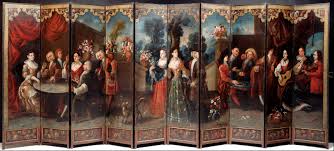
    gardenparty1.25Dear Artists,

    Today we’re going to look closely at a piece of art. I don’t think there’s any better way to understand the history and culture of a time and place than through art work. Even though artists often create something from their imagination rather than something that actually exists in real life, they often tell the bigger truth about a time and place. As Pablo Picasso said, “Art is a lie that tells the truth.”

    One thing we will see in this piece of art is the exchange of cultures. Cultures borrow ideas from one another every time they interact. And those ideas usually show up in art, food, fashion, and music.

    Sincerely,

    Mr. Heimbuck

  • 24 January 2018

    January 24th, 2018

    leguin1.24Dear Readers,

    Finding an author you love is a special thing. You’ll follow them for the rest of your (or their life), eagerly awaiting each new book they write and reading it over and over and over. And maybe someday you’ll see them read one of their books in person at the Tattered Cover.

    You’ll feel like you’re in a lifelong conversation with them, and you’ll often find them putting ideas you’ve had into words you never though to use.

    My hope for each of you is that you find a favorite author and read every word they’ve ever written. It’s what readers do.

    Sincerely,

    Mr. Heimbuck

  • 23 January 2017

    January 23rd, 2018

    flatearth1.23Dear Researchers,

    Yesterday we learned about evaluating the credibility of the sources we read. I can’t think of a more important thing I will teach you all year.

    There are all sorts of people out their vying for your attention. Some of them want to convince you to believe crazy things. And these people have YouTube channels, twitter feeds, blogs, and newspapers!

    You have to be able to decide if these sources are credible or not. You have to learn how to test their claims by comparing them with other sources. You have to figure out for yourself what you’re going to believe.

    Sincerely,

    Mr. Heimbuck

  • 21 January 2018

    January 22nd, 2018

    michaeljackson1.22Dear Learners,

    This weekend I was reading Michael Jackson’s Wikipedia page for some reason and that led me to the page for the Jackson 5 and that led me to the beginnings of Rhythm and Blues music and that led me all the way back to the beginning of recorded music. And I realized how all of it is connected. And that if you look closely enough at Michael Jackson’s dance moves, you see the beginnings of popular music more than one hundred years before.

    If you take any one thing, no matter how small, and look at it closely enough, it will take you all the way back to the beginning of time. Everything in the universe is connected by a story. Your job as learners, historians, and humans is to learn as many of those stories as you can.

    Sincerely,

    Mr. Heimbuck

  • 19 January 2018

    January 19th, 2018

    Dear Problem Solvers,

    Intelligence and talent are overrated. Those are about things you already know or can already do. And if you only ever rely on that, then you won’t ever learn anything new.

    You know what is underrated? Showing up and being actively engaged. Paying attention and being in the moment. Giving your all to whatever and whoever is in front of you.

    Because most of the problems you’ll face won’t have solutions that come from old thinking. They won’t have solutions that already exist. Intelligence might help you fill out a worksheet, but engagement and thinking will help you solve the real problems of being a human in the world.

    Sincerely,

    Mr. Heimbuck

  • 18 January 2018

    January 18th, 2018

    millay1.18Dear Readers,

    Edna St. Vincent Millay wrote “Afternoon on a Hill” in 1917. That was before any of my grandparents were born. At that time it took 3 days to travel from New York City to Los Angeles.

    Yesterday–when you can travel from New York to Los Angeles in just a few hours–some of you read “Afternoon on a Hill.” And even though so much has changed in the world. Even though your lives are so different from the life of Edna St. Vincent Millay, that poem still spoke to you.

    That’s the power of literature. It finds that human core that is true in all times and places.

    Sincerely,

    Mr. Heimbuck


  • 17 January 2018

    January 17th, 2018

    mlk1.17Dear Speakers,

    Words have power. Words move people to do things. Words not only predict the future, they actually shape that future.

    Yesterday some of you thought Martin Luther King, Jr. was a president. Because you knew he was a man of great power, you assumed he must have held a powerful position.

    But he wasn’t a president or a king or any kind of elected official. His power came from the words he used. The words that inspired people to peacefully fight for what was right, no matter what the cost.

    What sort of powerful words do you have?

    Sincerely,

    Mr. Heimbuck

  • 16 January 2018

    January 16th, 2018

    Colorado in 1860Dear Historians,

    This is Colorado in 1860–divided between four territories. In the centuries before that, it was divided between as many countries–Spain had its claims, France had its claims, Native people had their claims. Throughout its history, Colorado has been a borderland. An in-between place.

    That gives it a rich and complicated history. But the big question we have to ask is this: what drew people here? What is it about this place that convinced people to risk their lives and fortunes to come here? That answer is just as complicated, but it’s the question that drives our understanding of Colorado history.

    Sincerely,

    Mr. Heimbuck

  • 11 January 2018

    January 11th, 2018

    brain1.11Dear Learners,

    Yesterday, while you were exploring the history of the universe, I was learning about how the human brain learns. And here’s the big thing I learned:

    Intelligence is not fixed. Everyone can learn and get smarter and “grow” their brain connections.

    But it takes a lot of effort, practice, and time. My job is to choose activities that get your brain “working.” And your job is to put in the effort needed to build those new connections.

    Let’s do that today and everyday.

    Sincerely,

    Mr. Heimbuck

  • 10 January 2018

    January 10th, 2018

    museum1.10Dear Learners,

    Natural history museums are where I’ve learned the most about the world. And it’s easy to see why: museums are where we fit all of the knowledge of the world into one building.

    In one day in one place in the middle of Denver, Colorado, you can see the beginning of the universe 14 billion years ago. Then take a short walk to the planetarium and watch it rain diamonds on Jupiter. Next, observe the beginnings of human civilization over in Ancient Egypt.

    It’s all there. And it’s not just for the rich or powerful. This knowledge belongs to everyone. Take advantage of it.

    Sincerely,

    Mr. H

←Previous Page
1 … 63 64 65 66 67 … 105
Next Page→

Blog at WordPress.com.

Loading Comments...
  • Subscribe Subscribed
    • letters to my class
    • Join 34 other subscribers
    • Already have a WordPress.com account? Log in now.
    • letters to my class
    • Subscribe Subscribed
    • Sign up
    • Log in
    • Report this content
    • View site in Reader
    • Manage subscriptions
    • Collapse this bar