• About
    • The Salutations

letters to my class

  • 5 December 2019

    December 5th, 2019

    listening4.3Dear Students,

    We each have different amounts of money in our wallets, different cars in our driveways, and different clothes in our closets, but everyone has the same number of hours in a day. And each of us is in control of what we pay attention to during those days.

    If you put your attention on good things, you’ll be surprised by how much good is in the world; if you give attention to bad things, you’ll be disappointed and always believe that our world is bad and only getting worse.

    But it’s your choice and it’s all in your power.

    Sincerely,

    Mr. Heimbuck
  • 4 December 2019

    December 4th, 2019

    cards12.4Dear Scientists,

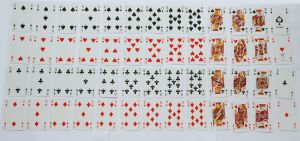
    I like the story of Dmitri Mendeleev using card games as an inspiration for the periodic table. He figured out that elements are a lot like cards: They’re most interesting when we put them next other other items based on their properties.

    And the most amazing thing about the periodic table is that by grouping the elements by their properties, Mendeleev started to see patterns. And he also started to see gaps. And based on those gaps, he was able to predict elements that scientists hadn’t even discovered yet!

    And it was all because he liked to play a few hands of cards.

    Sincerely,

    Mr. Heimbuck


  • 3 December 2019

    December 3rd, 2019

    continentaldrift12.3Dear Inventors,

    Yesterday when you made paper towers, I noticed the two teams with the tallest towers had very similar designs. But that shouldn’t surprise me. It’s a common occurrence throughout the history of science and technology: scientists and inventors often come up with the same idea independently.

    Ideas don’t just come out of people’s minds; they grow out of specific times and and places. And if we pay close enough attention, we can tap into those ideas that are floating all around our heads. But, of course, it takes hard work, dedication, and a little luck.

    Sincerely,

    Mr. Heimbuck

  • 2 December 2019

    December 2nd, 2019

    Dear Waiters,

    Students often come up to me and say, “It’s only 38 days until my birthday.” And I’m amazed at how good you are at figuring out the number. But it’s not just that you’re good at math; you’ve spent a lot of time looking forward to it.

    Waiting is hard. As you get older, it seems like it gets easier. But it doesn’t. You just learn to do it with a little more grace.

    But my hope is that you never get too good at waiting and lose the ability to look forward to things. Because the world is too full of wonderful things to not always have some light you’re walking towards.

    Sincerely,

    Mr. H

  • 5 November 2019

    November 5th, 2019

    Galileo11.5Dear Scientists,

    Science can be a dangerous thing. People like to keep things the way they are–beliefs, rules, the way things have been–and science can chip away at those things.

    And science shows us that there’s a lot more going on than what we see with our own eyes. And that can be a scary thing. It sure seems like the sun moves around the Earth, and we have a lot of stories about how important humans are, so if someone comes along with a telescope and says the Earth actually moves around the sun, people get scared. And they just might put you under house arrest!

    But the truth is worth it.

    Sincerely,

    Mr. Heimbuck


  • 4 November 2019

    November 4th, 2019

    time3.7Dear Timekeepers,

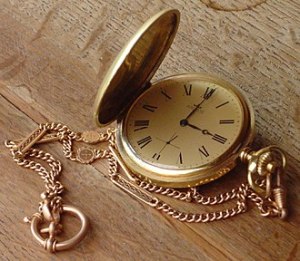
    We tried to explain Daylight Savings to our six-year old, but she was a little confused. She thought the clocks somehow changed themselves or that time itself stopped. (She’s seen Beauty and the Beast too many times.)

    No, the world keeps spinning and the sun keeps rising and setting, but humans decide what to call it and how to keep track of it. And our ability to get everyone in the country (except Arizona and Hawaii) and a lot of the world to turn their clocks back an hour is a miracle. And it’s not just a miracle of clocks or technology; it’s a miracle of human communication and coordination.

    Sincerely,

    Mr. Heimbuck

  • 7 October 2019

    October 7th, 2019

    theuniverse8.21Dear Explainers,

    We expect too much from science. We want explosions, mind-blowing discoveries, and earth-shattering ideas. But science is really just about explaining how things work. We may use beakers and Bunsen burners and chemical reactions to get there, but really science is the art of explanation.

    And explanations are powerful things. Because if we know how one thing works, then we can apply that explanation to how other things work. And when we know how a thing works, we can apply it to solving real human problems.

    Sincerely,

    Mr. Heimbuck


  • 2 October 2019

    October 2nd, 2019

    robertjohnson10.2Dear Humans,

    Robert Johnson was a blues singer and guitar player in Mississippi in the 1930s. One time he played for some other bluesmen. He wasn’t very good and they laughed at him. A year later he played for the same guys, and they were amazed at how good he had gotten.

    So they came up with the story that he went to the crossroads and sold his soul to the devil to be able to play that well.

    Of course, that’s not true. But I don’t even think it’s a better story. I think the story of Robert Johnson practicing, learning, and mastering the guitar is much more intriguing. Because that’s a story we can all tell about ourselves.

    Sincerely,

    Mr. Heimbuck

  • 1 October 2019

    October 1st, 2019

    writing10.1Dear Humans,

    The way humans use language is always changing. You and I–we–are each and all the drivers of that change. That’s the way it’s always been, and I think it’s the way it always will be.

    In such an ever-changing situation, memorizing rules doesn’t help us as much as recognizing  patterns. The only rule in communication is to be understood. And as life changes and technology changes, we find different ways to do that.

    But if you become the type of thinker who can recognize those patterns, hear those patterns, and follow those patterns, you’ll always be understood and you’ll always understand.

    And that’s the best thing a human can be.

    Sincerely,

    Mr. Heimbuck

  • 30 September 2019

    September 30th, 2019

    knowledge9.30Dear Chemists,

    Sometimes people ask me why you need to know what we’re teaching you in science. Well, the truth is that “you” probably don’t. For most of human history, humans were perfectly content thinking the earth was the center of the universe. They still went about their daily lives.

    But we would never have sent humans to the moon if we hadn’t learned about the stars and created the tools to help us understand them. We would never have increased global life expectancy by decades if we didn’t have technologies that came from scientific discoveries.

    What we learn is not just about us. Sometimes we’re just passing along the torch of knowledge.

    Sincerely,

    Mr. Heimbuck

←Previous Page
1 … 44 45 46 47 48 … 103
Next Page→

Blog at WordPress.com.


Loading Comments...
 

    • Subscribe Subscribed
      • letters to my class
      • Join 34 other subscribers
      • Already have a WordPress.com account? Log in now.
      • letters to my class
      • Subscribe Subscribed
      • Sign up
      • Log in
      • Report this content
      • View site in Reader
      • Manage subscriptions
      • Collapse this bar