• About
    • The Salutations

letters to my class

  • 11 August 2020

    August 11th, 2020

    Dear Humans,

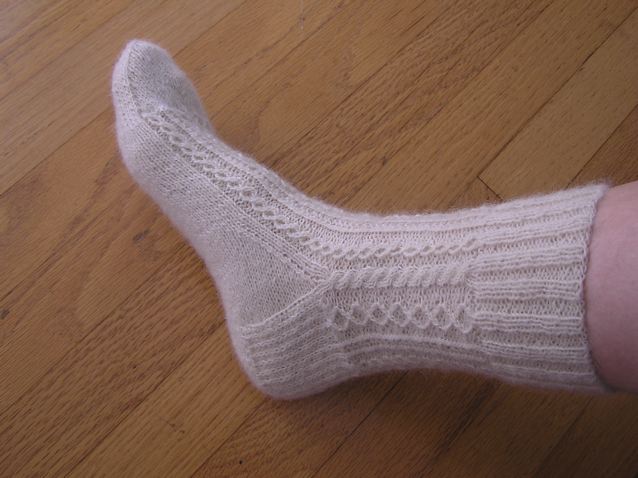
    I bought new socks at Walgreens yesterday. I’m not sure why. I guess because they were sitting in the middle of the aisle and they had a big sign extolling their cheapness. And because there’s nothing better than new socks.

    But these were cheap socks. Thinner than toilet paper. And as I walked back to my car, I thought about all of the resources put in to making these socks–cotton grown in America and shipped to the Far East where factory workers put it through a series of complicated machines that eventually spit out some socks that are then shipped back to America and trucked across the country to my neighborhood Walgreens where a person in a blue vest rings them up for me. And all that happens just so I can have the brief pleasure of putting on new socks.

    But the problem with putting on new socks is that you can only do it one time. After that first wear and wash, new socks are just like every other sad stocking in your top drawer. But the cost of producing them isn’t so easily forgotten.

    Sincerely,

    Mr. Heimbuck
  • 10 August 2020

    August 10th, 2020

    Dear Humans,

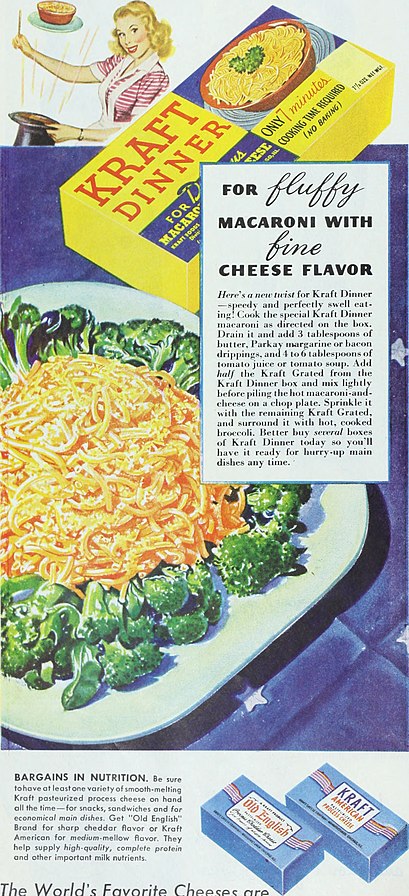
    When I heard that Kraft was releasing a breakfast mac and cheese, I thought they were reformulating their recipe. Maybe they were going to add sausage crumbles or bacon pieces or work some scrambled egg in there. But no, they are just going to put the word breakfast on the box.

    Meal rules are kind of funny. There are no laws stating what you can eat when. But as in most cases, custom is stronger than law. There was surely a good reason (or many good reasons) that humans started eating eggs, bacon, pancakes, and cereal for the first meal of the day. But why do we still do it?

    I do enjoy breakfast for dinner every once in a while. But I don’t eat it every week like I eat tacos, pizza, or stir fry. But whenever I pour syrup on my pancakes while the sun is going down, I take a little pleasure in breaking the rules. I guess I’ll feel the same way when I’m chowing down on mac and cheese for breakfast.

    Sincerely,

    Mr. Heimbuck

  • 7 August 2020

    August 7th, 2020

    Dear Humans,

    I used to not care much about Steely Dan. I didn’t hear them growing up and I always thought it was kind of dorky jazz rock. Plus, I heard a lot of cool people make fun of them, so I dismissed them. And yet, I kept seeing a small segment of music listeners who really, really loved Steely Dan.

    If everyone seems to like something, then it might be good or it might be forgettable. In the mid-90s I bought a Deep Blue Something CD because everyone loved the song “Breakfast at Tiffany’s” but I stopped listening to that CD about 2 weeks after I bought it.

    But if there’s something that a few people really, really like–I mean dedicate a large portion of their lives and beings to–then you can be pretty sure there’s something there. It doesn’t mean that you’ll end up liking it that much. But it does mean you should give it a second chance.

    Sincerely,

    Mr. Heimbuck

  • 6 August 2020

    August 6th, 2020

    Dear Spenders and Hoarders,

    Have you heard of the coin shortage? When you pull up to the drive-thru at McDonald’s there’s a sign asking you to use a card or pay with exact change because they don’t have enough coins to make change. Because we’re running out of coins!

    Well it’s been a weird time over the past few months. And it’s impacted every part of our lives, including coins. People aren’t spending them, businesses aren’t turning them into banks, banks aren’t returning them to customers. There’s been a small decrease in number of coins produced because the Mint has to follow social distancing guidelines too and has been slowed down because of it. But this is a circulation problem. This is about flow.

    And it makes sense that this problem shows up in our money because money is all about circulation. Money moves quickly and easily and that’s what makes it a useful invention. It’s also nearly universal, meaning everyone accepts it.

    In that sense, money is a lot like virus. It moves along the same pathways as viruses. And in taking steps to slow the spread of the cornoavirus, we’ve slowed the spread of everything that moves along those pathways. At least for a while.

    Sincerely,

    Mr. Heimbuck

  • 5 August 2020

    August 5th, 2020

    Dear Humans,

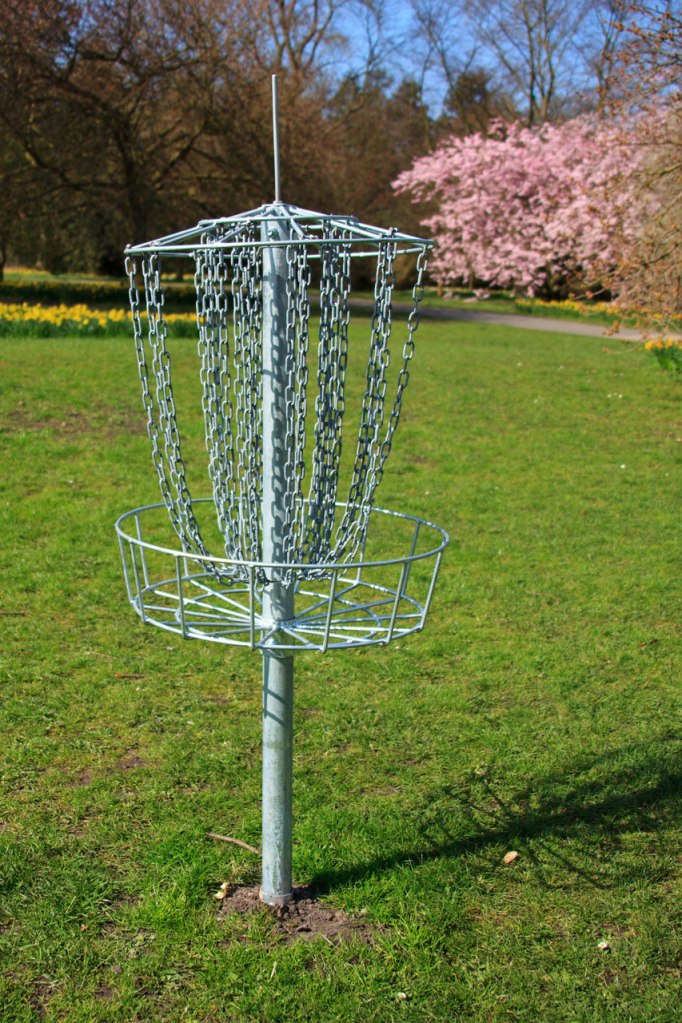
    I was at a park the other and there were disc golf baskets dotting the park. Just a pole cemented into the ground holding up a wire basket and some wires that hang with chains. But those simple pieces of equipment completely changed how people acted on that expanse of Kentucky bluegrass.

    The same thing happens when you put up a soccer goal in a field or a basketball hoop on a slab of concrete. People’s imaginations take over and they turn that simple place into an arena or stadium full of cheering fans.

    Do you have any idea how many game-winning shots I made in my driveway over imaginary opponents? The human imagination is an infinite well; it just requires a little priming.

    Sincerely,

    Mr. Heimbuck

  • 4 August 2020

    August 4th, 2020

    Dear Humans,

    If you look around my house you’d think it is a museum to my failures. In the garage there’s the circular saw that I used to make one super-rickety box that holds nothing. In the basement is the flat-tired unicycle my dad gave me that I have tried (and failed) to ride exactly one time. There’s the soldering iron that I have used to fix exactly nothing. There are the yo-yos I could never quite get to fall asleep. There are the shelves and shelves of unread books.

    And yet I bought a Rubik’s cube yesterday. There’s a very good chance that it ends up in a box somewhere before I ever get even one side all the same color. But I’m going to try.

    They say you should learn from your mistakes. But one thing you should never, ever learn from your mistakes is that you should stop making new ones.

    Sincerely,

    Mr. Heimbuck

  • 3 August 2020

    August 3rd, 2020

    Dear Naturalists,

    We were so bored during the pandemic that we drove out on the Eastern Plains. We literally drove past a place called Last Chance, CO.

    There’s not much to see out there. Flat and hardly rolling plains in various shades of parched foliage. But, then all of a sudden you’ll see a stand of giant cottonwood trees, and you’ll know that you’re about to cross a stream or a creek (or what used to be a stream or creek).

    It’s amazing how large the cottonwood grows under such conditions. Maybe it just looks big because everything around it so small. Any tree would look tall when it’s standing next to a corn stalk.

    But I think it’s more that the cottonwood “knows” how to grow in an arid environment. It grows quickly, tall, and cheaply and dies young (for a tree). In that respect, it’s a lot like the people who came out West in the 19th century. They grabbed as many resources as they could as quickly as they could and most of them went bust before they could make it. Our history is often written best in the clues that we unknowingly leave behind.

    Sincerely,

    Mr. Heimbuck

  • 31 July 2020

    July 31st, 2020

    Dear Scientists,

    My favorite word in science is “imagine.” Yesterday I was reading a book about our moon’s formation and the text said, “imagine you saw it from Earth.” Imagine you saw the large planetesimal hurtling towards Earth, growing larger and larger as it approached, until it crashed into Earth in the biggest collision you could imagine, breaking off chunks of earth that orbited in a ring before forming together to make an orbiting moon.

    We like to think science is all about facts, observations, and hard data. And those things are true. But if we didn’t use that evidence to tell stories, then none of it would matter much.

    Most of what we study is too large, too small, too far away, or too much a part of us to study really closely. Unless you have a magic school bus, you can’t enter the human body or travel back to the time of dinosaurs. So instead we gather evidence and put it together to tell a story of how things got to be the way they are.

    Sincerely,

    Mr. Heimbuck

  • 30 July 2020

    July 30th, 2020

    Dear Humans,

    My wife planted one squash plant in our garden and now there are yellow squash on every surface of our kitchen. They are everywhere. And I’m having trouble figuring out what do with them. So far I’ve sauteed, pureed, and roasted. Today I’ll try turning it into bread. And then I’m just going to start leaving it on my neighbors’ doorsteps.

    We often think the biggest problem in life is when we don’t have enough. And that’s often true. We often feel like we don’t have enough time or enough money. But just as often our problem is that we have too much and we don’t know what to do with it.

    Dealing with scarcity is easy (though painful): just do without. Dealing with abundance requires more creativity, and discipline, and compassion. It requires us to think about what we really need, who could use a little more, and the best way to use the abundance that we have.

    Sincerely,

    Mr. Heimbuck

  • 29 July 2020

    July 29th, 2020

    Dear Humans,

    This pandemic has offered us a crash course in understanding risk and chance. I’ve heard many people talk about how they’ve done things the right way: they’ve socially distanced, they’ve avoided mass gatherings, they’ve worn their masks, etc. And when they say these things, they seem to be saying that they don’t deserve to catch Covid-19.

    But if you look at that familiar picture of spiky Covid-19, you’ll see that it does not have a human face. And it does not speak human language. And it cannot be reasoned with. It’s just a bunch of RNA covered in protein that is doing the only thing it knows how to do: spreading to any host it can find.

    So all we can do is set up obstacles in its path. We can’t guarantee safety. We can’t just make it go away if we wish hard enough or try to covince Covid-19 that we’re good people who don’t deserve to be sick. We can only take the hard steps to try to protect ourselves and one another.

    Life is always like that. You never have complete control over its outcomes and you never really get what you deserve. All you can do is live each day with the ethic of being safe and being smart and doing all you can to create your own luck.

    Sincerely,

    Mr. Heimbuck

←Previous Page
1 … 34 35 36 37 38 … 103
Next Page→

Blog at WordPress.com.


Loading Comments...
 

    • Subscribe Subscribed
      • letters to my class
      • Join 34 other subscribers
      • Already have a WordPress.com account? Log in now.
      • letters to my class
      • Subscribe Subscribed
      • Sign up
      • Log in
      • Report this content
      • View site in Reader
      • Manage subscriptions
      • Collapse this bar