Nature is wasteful. It gives and gives and gives and most of it dies. Think of all the seeds in a strawberry. All the pinecones on an evergreen tree.
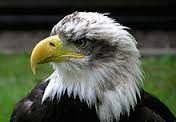
Out of that prodigiousness comes a variety of forms. Today at our birds of prey assembly, look of the variety that exists within this family of raptors. Think about how those forms allow ndividuals to survive. And wonder at nature’s bounty.
A polymath is a person who knows a little bit about everything. Benjamin Franklin is America’s greatest polymath. He was involved in publishing, politics, science, and education. Many people argue that Ben Franklin was the quintessential American: he showed the traits that makes America what it is.
Today we’ll read about this Founding Father and think about his contributions to America. And we’ll ask what Franklin has to teach us about America and Americans today.
No matter what job you have when you grow up, you’re going to have to learn new things to do it. Some of you will have jobs that don’t even exist yet. So not only will you have to learn new things, you’ll have to learn things that we don’t even know yet!
Therefore, your most important job in school is to learn to think and learn to learn. It’s nice to know things about the world, and knowing things about the world can help you think more clearly about it, but most important is that you know how to know more.
I heard a scholar talk about reading over the weekend, and he said that rather than ask what a text means, we should ask how a text works. I wholeheartedly agree.
Even the author of a text doen’t know the “true meaning” of a text she writes. So it’s foolish for us to look for it. And to be honest, figuring out how a text works is a lot more difficult and requires us to read much, much closer.
So today when we look at texts–like the Gettysburg Address–don’t just ask what it means. Ask how it works.
I didn’t have a letter last Friday because I had to wish dishes on Friday morning.
I should have kept up with them, but life happens. And they accumulated, as dishes do. It’d be nice if everything went according to plans, and each day could be predictable and easy, and the sink could always be empty.
But sometimes you just have to put everything on hold and do the dishes. Luckily, 2016 gave us an extra day to try to get caught up.
Knowing about the past takes a lot of imagination. We have to imagine what life was like for these colonists in New England. We do that through studying texts, knowing facts about the time and place, and empathizing with the people.
And it’s not just the famous figures that we should empathize with. We’re interested in understanding everyday life for the common people in the colonies because it was these lives that would eventually rise up against colonial rule and fight for independence.
Today be thinking about the forces that led to the War for Independence. What did these everyday people in this new land want for themselves? What were they willing to sacrifice to get it?
We talked about the big questions that humans have asked for millenia: “What is the good?” “What is happiness?” and “What is justice?” We mostly wrestle with these questions in texts–histories, poems, essays, stories, novels. Our job as scholars is to read those texts, think about them, and see what they have to say about these Big Questions.
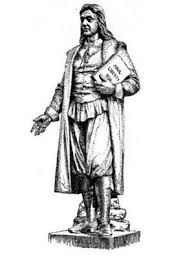
It’s nice to know what year Roger Williams founded Rhode Island, but what’s really important is to think about the Big Questions Roger Williams’s life and experience ask: “What is freedom?” “What is conscience?” “How should we make rules?” Through wrestling with these big questions, we just naturally learn the facts that go with them.
As you learn, you leave behind your own thoughts on the Big Questions–maybe in what you write and publish, but mostly in the life that you live.
The other day I opened a fortune cookie that said, “Only the educated are truly free.” Sometimes fortune cookies just know–they put into words what you’ve suspected your whole life.
Education and learning is the key to seeing “the more” in the world. The world is so much bigger than us. It reaches far back into the past and deep into the infinity of the universe. To try to understand those times and places is the highest form of freedom.
Our circumstances might sometimes be stinky, but books and ideas can help us go beyond them. And perhaps, they can help us change them.
Today we’ll begin studying the human body. The human body is an organism and like all organisms, everything it does it does to survive.
Living creatures have developed a lot of fascinating and creative ways to stay alive in the world. Anytime you see one of these strange adaptations, you should always ask the same question: how does this help the organism survive?
No matter how silly an animal’s adaptation may look (and there are certainly some silly looking animals out there) the purpose is to help the organims survive.